
Art
OUR ART CURRICULUM
Our Curriculum documents can be found at the bottom of this page.
At Beck our art curriculum engages, inspires and challenges pupils, equipping them with the knowledge and skills to develop creatively. The curriculum is designed to be varied. It is designed to build skills incrementally with careful mapping across key stages and between year groups. This curriculum engenders creativity, independence, judgement and self –reflection. We want our pupils to love, appreciate and be able to evaluate art as well as create their own art, craft and design that they are proud of. Art underpins many areas of the curriculum as pupils “draw to learn”. They draw different concepts to secure their understanding.
Through our curriculum we aim to nurture pupils’ creativity, imagination and visual literacy, encouraging them to think like artists and designers. The intention is for pupils to develop the confidence to experiment, express ideas and communicate meaning through visual and tactile media.
Pupils will have many opportunities to follow the art sequence where they will generate ideas, make or draw a piece of art, evaluate it. Alongside this, pupils will continually have the opportunity to experiment with different media building a secure knowledge and understanding. This begins in Y1 and is present up until Y6.
The curriculum promotes an appreciation of art as a powerful form of human expression, helping pupils to understand its role across different cultures, time periods and creative industries. It encourages children to value originality, take creative risks and reflect critically on their own work and that of others. Every child has a sketchbook they take through school. This is a place for drawing, experimentation, note taking, appraising the art of others and practising skills.
The art curriculum is balanced to ensure that both traditional and experimental art work is covered as well as large- and small-scale work. Children have many chances to produce artwork individually, in pairs, groups and as a class. From EYFS to Y6, pupils produce 2d and 3d work that is age appropriate to support the development of creativity and motor skills. During their time at Beck, children are introduced to a range of artists and styles of artwork with the opportunity to use this work to inspire their own pieces. Local and world artists are studied and celebrated to give pupils a broad understanding of what it is to be an artist. This learning is supported through visits to art galleries and chances to look at art in real life.
Our Art scheme supports teachers in developing their subject knowledge and pedagogical confidence, enabling the delivery of rich, engaging and purposeful lessons. The curriculum is designed to be both inclusive and ambitious, ensuring all pupils are equipped to enjoy, create and respond to art in meaningful ways.
At Beck we have chosen to use Kapow Art.
Our curriculum and scheme of work is designed with five strands that run throughout.
These are:
- Generating ideas
- Using sketchbooks
- Making skills, including formal elements (line, shape, tone, texture, pattern, colour)
- Knowledge of artists
- Evaluating and analysing
Units of lessons are sequential, allowing children to build their skills and knowledge, applying them to a range of outcomes. The formal elements, a key part of the National Curriculum, are also woven throughout units. Key skills are revisited again and again with increasing complexity in a spiral curriculum model. This allows pupils to revise and build on their previous learning.
Units in each year group are organised into four core areas:
- Drawing
- Painting and mixed-media
- Sculpture and 3D
- Craft and design
The National curriculum mapping document below shows which of our units cover each of the National curriculum attainment targets as well as each of the strands.
Our Progression of knowledge and skills document below shows the skills that are taught within each year group and how these skills develop to ensure that attainment targets are securely met by the end of each key stage.
Creativity and independent outcomes are embedded into our units, supporting our children in learning how to make their own creative choices and decisions, so that their art outcomes, whilst still being knowledge-rich, are unique to the pupil and personal.
Lessons are always practical in nature and encourage experimental and exploratory learning with pupils using sketchbooks to document their ideas.
We adapt our lessons to ensure that lessons can be accessed and enjoyed by all pupils and opportunities to stretch pupils’ learning are available when required.
Knowledge organisers for each unit support pupils by providing a highly visual record of the key knowledge and techniques learned, encouraging recall of skills processes, key facts and vocabulary.
Making sure our Art curriculum and teaching is high quality
Kapow Primary supports teachers who may lack confidence in teaching art. Pupil videos created by subject specialists help pupils to see art techniques modelled by experts, to ensure the delivery of Art in our school is of the highest quality. Each unit of lessons includes multiple teacher videos to develop subject knowledge and support ongoing CPD. Kapow has been created with the understanding that many teachers do not feel confident delivering the full Art and design curriculum and every effort has been made to ensure that they feel supported to deliver lessons of a high standard that ensure pupil progression.
After the implementation of our curriculum, children should leave us equipped with a range of techniques, knowledge and skills and the confidence and creativity to form a strong foundation for their Art and design learning in Secondary School.
The expected impact of following the Kapow Primary Art and design scheme of work is that children will:
★ Produce creative work, exploring and recording their ideas and experiences.
★ Be proficient in drawing, painting, sculpture and other art, craft and design techniques.
★ Evaluate and analyse creative works using subject-specific language.
★ Know about great artists and the historical and cultural development of their art.
★ Meet the end of key stage expectations outlined in the National curriculum for Art and design.

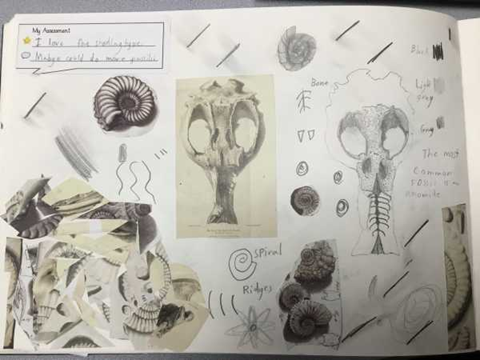
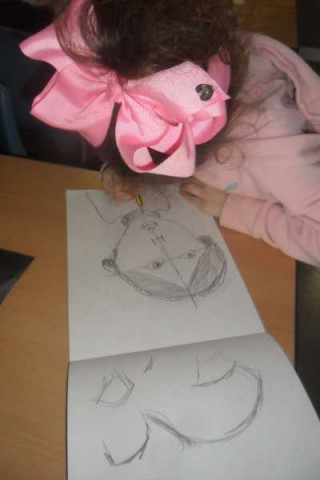
“We want our pupils to love, appreciate and be able to evaluate art as well as create their own art, craft and design that they are proud of“
Beck Primary